What there is to do at Four Corners Monument
The photograph, which is the reason everybody came
There is no trail here, no viewpoint loop and no visitor center exhibit to work through. You pay at the booth, walk out onto a low open plaza, wait your turn, get on the marker so that your limbs are in four states at once, and somebody takes the picture. The center marker is a disc set in granite, installed by the Bureau of Land Management in 1992 according to the plaque on site; the 1912 original was a plain cement pad.
Around 250,000 people a year do this, on a 2025 figure from the Navajo Nation president’s office, and the line is the variable that decides whether your stop is thirty minutes or an hour. The plaque itself is worth two minutes on the way past: it names the four surveyors whose work put the corner where it is, and records restorations in 1899, 1931, 1962 and 1992. Why the corner is where it is, and why that is the right place in law, is on is it in the wrong place.
Get the camera low. At standing height the four quadrant lines foreshorten into a smudge and the photograph stops explaining itself. Crouch, or set the phone on the paving, and the disc reads properly. I shoot medium-format black and white out here and the same rule holds either way — it is a photograph about lines, so keep the lines.
The vendor stalls
The stalls ring the plaza, and they are the second half of the visit. Navajo vendors sell handmade silver and turquoise jewelry, hand-woven rugs and ceremonial baskets, along with traditional food including frybread and Navajo tacos. A demonstration center on site hosts artisans. Vendors and the park office both keep 8:00am to 5:00pm daily.
That 5:00pm matters more than it looks, because in high summer the gate stays open until 8:00pm. Arrive at seven on a July evening and you get the marker, long light and an almost empty plaza, and no craft market and no food. That is a fine trade if you chose it. It is a poor one if you drove out expecting to buy something.
I am not going to promise you the stalls will be there. They are independently operated and how many are trading varies with the season, the weather and the day. In winter and on summer evenings, expect few or none. If buying directly from the artisans is the point of your trip, come mid-morning to mid-afternoon and go in with the expectation that it might not happen.
What is prohibited, and what it costs you
Four rules, and two of them ruin people’s days with some regularity.
- Drones are banned at all Navajo Tribal Parks, and Navajo Parks states they “will be confiscated.” Not turned away, not fined. Confiscated. If you have been flying legally over public land all week, this is a different jurisdiction with a different rule.
- Dogs are prohibited, with fines under Navajo Nation law. Given there is no shade documented at the site, this is one to plan around before you leave rather than in the parking area.
- Littering is prohibited.
- Rock climbing and camping are prohibited.
These are the Navajo Nation’s rules on the Navajo Nation’s land, and the authoritative statement of them is Navajo Nation Parks & Recreation rather than this page. Whose land this is, quadrant by quadrant, is on who owns it.
Facilities, and one piece of news
New restroom facilities opened on 4 August 2026, announced by the Navajo Nation Office of the President: eight women’s restrooms including one ADA-accessible unit, four urinals, three men’s stalls and one ADA-accessible men’s restroom. The old building was described as structurally unsound and was demolished. Every guide that tells you this place has portable toilets was written before that date.
There is plumbing on site, but whether there is drinking water for visitors is not stated anywhere I can find, so bring your own. The full detail, including what the project cost and where the nearest groceries are, is on food and facilities.
Honest expectations
What works
- A photograph you genuinely cannot take anywhere else in the country
- Buying jewelry, rugs or baskets directly from the artisans who made them
- Frybread and Navajo tacos from the food stalls, when they are trading
- A demonstration center where artisans work
- Brand-new restrooms as of August 2026
- US$8 per person, and nothing else to buy a ticket for
Worth knowing
- It is 30 to 60 minutes, not a day out
- No trail, no viewpoint loop, no museum
- The stalls are not guaranteed to be open
- No shade is documented on an exposed plaza at 4,861 feet
- Drones confiscated, dogs fined
- The line for the disc is the whole queue in July
If that reads as underselling it, that is deliberate. This is a stop rather than a destination, and the people who enjoy it most are the ones who arrived knowing that. My full argument both ways is on is it worth it.
Things to do nearby that are actually bookable
Since the monument itself is a half-hour and a photograph, the day usually needs something else in it. Mesa Verde is about 49 road miles east and is where the guided options are. None of these visits Four Corners Monument — no bookable product anywhere does — and two of them describe a viewpoint over the Four Corners region, which is a different thing tens of miles from the marker.
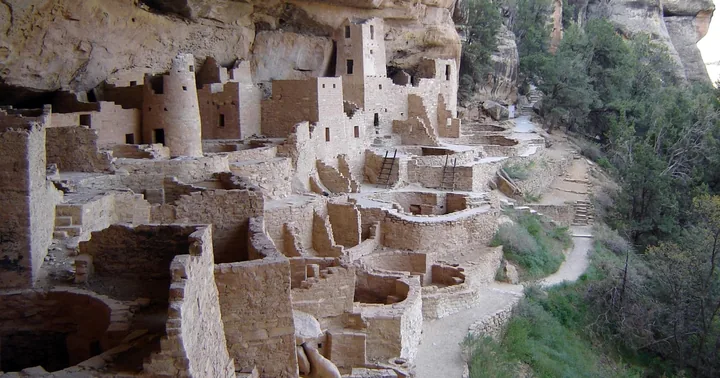 Nearest & cheapest
Mesa Verde: 700 Years Tour & Ranger-Guided Cliff Palace Visit
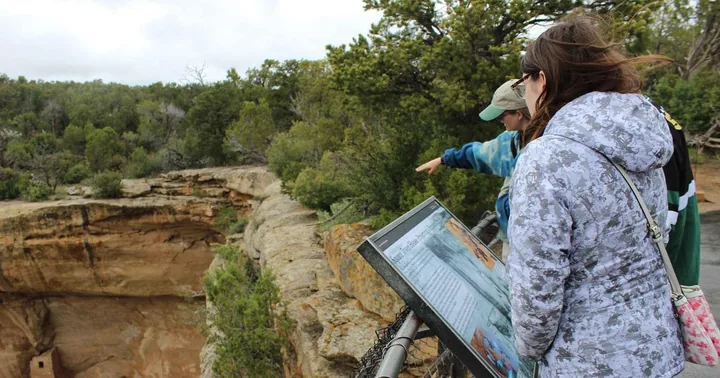 Sees all four statesPark entry included
Mancos: Mesa Verde National Park Half-Day Tour
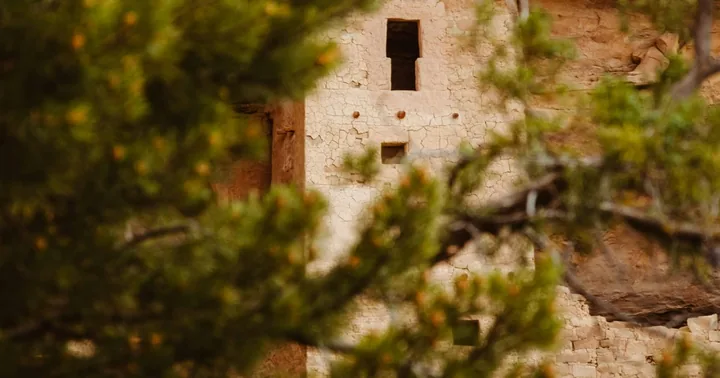 Best rated herePark entry + lunch included
Durango: Mesa Verde National Park, Cliff Palace Tour with Lunch
One correction to the standard line under that panel: 24-hour free cancellation is the platform default, and this particular operator closes cancellations three days ahead. Its price also excludes the Mesa Verde entrance fee, which the operator itself lists at US$30 per vehicle or US$15 per person. Read the terms on the product page before the price — the arithmetic is on what it costs.
Also useful before you drive: the hours and the time-zone trap and the best time to go.
Frequently asked questions
Is there anything to do at Four Corners Monument?
Three things: the four-state photograph on the disc, the ring of vendor stalls selling Navajo silver and turquoise jewelry, hand-woven rugs, ceremonial baskets, frybread and Navajo tacos, and a demonstration center where artisans work. There is no trail and no museum. A typical visit is 30 to 60 minutes.
What are some things to do at the Four Corners Monument?
Take the photograph on the marker, read the plaque naming the four surveyors and the 1899, 1931, 1962 and 1992 restorations, buy directly from the artisans at the stalls, and eat frybread if anyone is cooking. Vendors keep 8:00am to 5:00pm daily, but the stalls are independently operated and are not guaranteed to be trading.
Can you fly a drone at Four Corners Monument?
No. Drones are banned at all Navajo Tribal Parks and Navajo Parks states that they will be confiscated. It is a tribal park on Navajo Nation land, so the rules are the Nation’s and differ from what you may be used to on nearby public land.
Can I bring my dog to Four Corners Monument?
No. Dogs are prohibited, with fines under Navajo Nation law. With no shade documented at the site, leaving one in a vehicle is not a workable plan either, so this is worth sorting out before you set off.